The last shot of Girls season five
showed seminal character Jessa nude, lying post-coitus with her
boyfriend on the floor. As the camera slowly panned down, viewers were
shown Jessa's pubic hair, which was shaved into a strip.
They also probably saw, weeks earlier, when Hannah (played by Lena Dunham) exposed her crotch to her boss and shortly thereafter said, "It also helped that my bush was at full capacity right now."

During Broad City's second season in 2015, Ilana uses
a dressing room mirror to gaze at her vagina, and the blur that covers
it is not skin-toned, but a muddy mix of black.
For Ilana Glazer, who plays Ilana on the show, and Abbi
Jacobson, the other co-creator, this was an obvious decision. "The
pixels, they wanted them to be Ilana's skin tone," Jacobson told Jimmy Kimmel. "I got a baby vagina? I'm an adult. I have pubes!" Glazer chimed in.

All of these instances involve young women in their 20s, and
are indicative of social change. Women are talking about their pubic
hair, and the many totally acceptable options for what to do with it. In
doing so, they're bringing about this idea that having it or not having
it shouldn't really be that big of a deal at all.
Compare Girls and Broad City to Sex and the City, a show where Carrie Bradshaw regularly talked about her bikini waxes — and we even got to see her get one. Sex and the City was on the air from 1998 to 2004 and now, just 12 years later, the idea of Girls or Broad City characters shelling out cold hard cash to get their pubes ripped out seems against character.
As we clearly enter into a new age of pubic hair acceptance
(which could even be considered pubic hair proudness at this point), of
course it's social media where the powerful conversations are taking
place.
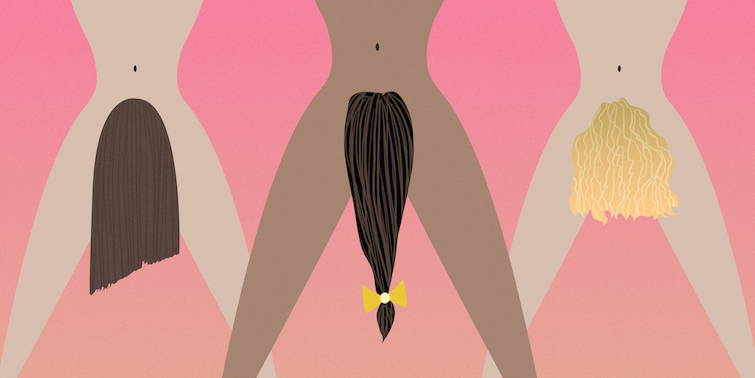
#Instapubes: Seeing women with pubic hair is
important because it sparks the conversation that women now have
options, and it helps to normalize pubic hair in general. It also,
wonderfully, helps get rid of the myth that
women are concerned about what men think about it. To see how far we've
come in terms of what we're able to view on a regular basis, look no
further than Instagram, this generation's favorite platform for
launching movements that address body expectations (see: #FreeTheNipple).
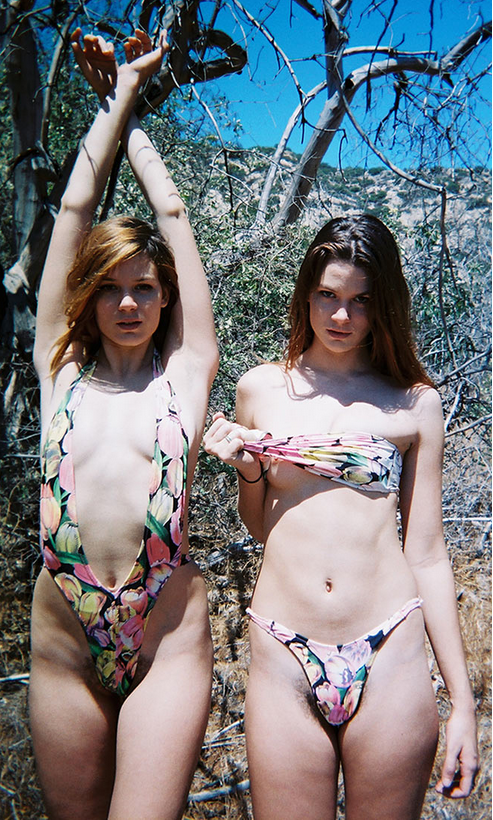
In this instance, pubic hair was political, as it was in 2015 when an image from the online magazine Sticks and Stones, of two girls in bikinis with visible pubic hair, was removed.
It sparked a conversation on social media about what was actually taboo, what really wasn't and why.
"Unfortunately Instagram has ruled out natural hair that
appears on all bodies of women that don't trim their bikini lines," the
mag's director, Ainsley Hutchence, told Mic at the time. "Clearly this is absolutely sexist. Instagram believes that women should wax or get off their platform."
Read more: This Photo Was Banned By Instagram Thanks to Society's Sexist Double Standards
Shortly thereafter, Instagram actually apologized for removing the image, telling Mic at
the time that while they try to find a balance "between allowing people
to express themselves creatively and having policies in place to
maintain a comfortable experience for our global and culturally diverse
community," they acknowledge they "don't always get it right." Since
that instance, Instagram has become far more keen, opening the
floodgates for women, artists and photographers to show off the female
form — hair down below and all.
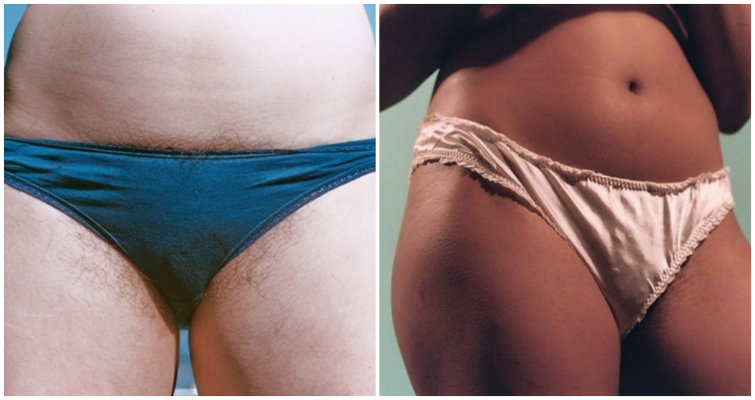
One artist who has taken advantage of this is Ashley Armitage, who runs the Instagram account @ladyist.
While plenty of her portraits revolve around girls showing off their
armpits, there are also a few shots of girls in their underwear with
pubic hair poking out around the sides.
"Right now it seems like there's a group of girls on social
media fighting for body hair acceptance, and not just fighting for body
hair, but fighting for our right to choose," Armitage said via email.
"It's really a fight about allowing a girl the agency of her choice. You
wanna shave? Great! You wanna grow it out? Great! Any way you like it,
it's your choice."
Armitage thinks Instagram has been a particularly good platform for this discussion because of the kinds of people it attracts.
"One time, I posted a photo of my friend in a bikini, with
pubic hair coming out, and I got such a huge mixed reaction," she said.
"My favorites, though, were a few people who told me that when they
first saw the photo they thought it was gross, but then after they saw
it again they started to get used to it, and then became totally fine
with it and saw it as natural."
This is why seeing images like this are important.
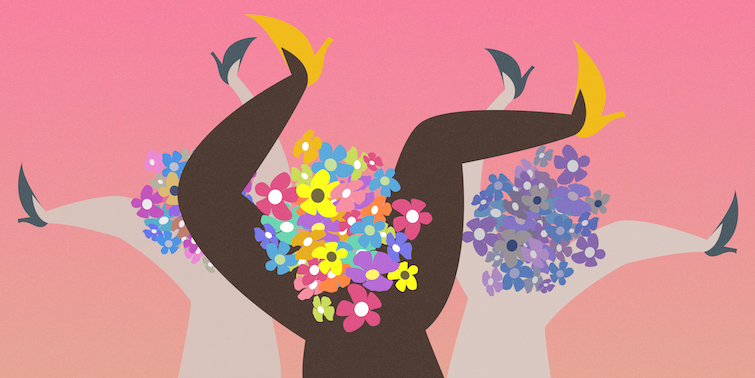
Instagram, in this case, is a tool for change.
Why now? Certainly Instagram's not the only catalyst
for this conversation. It also has to do with how informed this
generation is. With things like the internet at our fingertips, we've
become skeptical of accepting what we're told is "OK" or "attractive."
We are also living in a day and age when feminist conversations in
the United States are more accessible than ever before, and to some,
shaving or augmenting your body for a partner or to adhere to society's
norms just doesn't make sense. (Because whose body is it, really?) It
should also be noted that in some cultures pubic hair is actually seen
as aspirational.Another woman who's been quite vocal about making choices in regard to her own body is Molly Soda. In April, she penned an essay for Nylon, titled "This Web Artist Is Ditching the Razor and Fighting the Patriarchy," that elaborated on why she personally chose to forego shaving. For her, it was just a personal decision, not wrapped up in any political agenda other than she wanted to shave some of her body and didn't want to shave others.